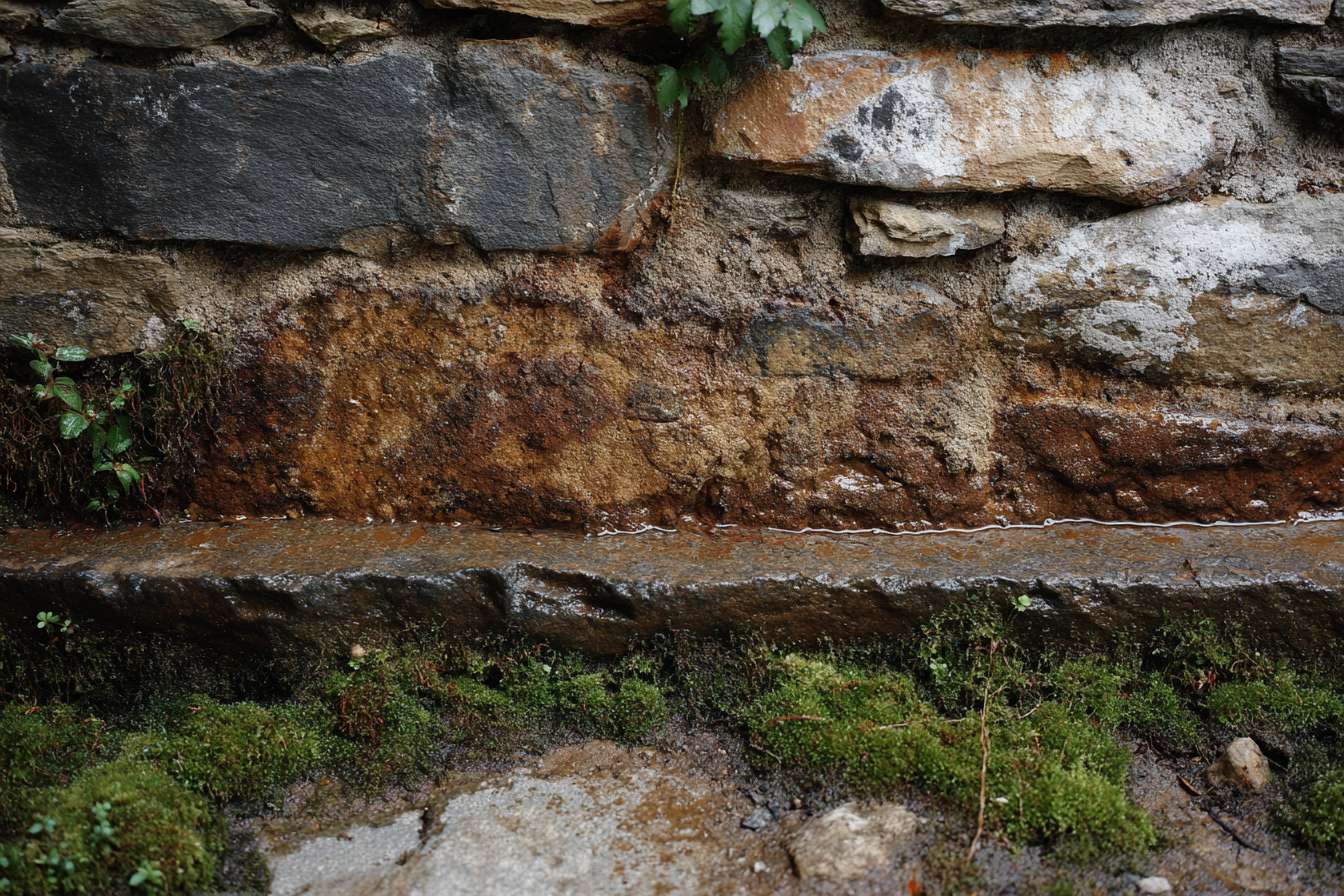
Water
Water moves through the earth indifferent to what stands above—it finds the lowest point, the softest path, the microscopic fissure in stone. A building stands in its way, not above it, and the relationship between structure and flow defines much of what endures and what fails. The site contains water long before the foundation is laid, holds water during rain, and will continue to hold or shed water for centuries after the roof is raised.
The Invisible Pressure Below
Groundwater exists in the spaces between soil particles and within fractured rock, filling the pores from the water table downward. This water is not stagnant—it moves slowly through the earth, following the slope of the bedrock and the permeability of the soil layers. During wet seasons the water table rises; during dry periods it recedes. The depth varies dramatically by geography: in some regions the water table sits three feet below the surface, in others it lies hundreds of feet down.
A foundation built in saturated soil faces constant hydrostatic pressure. Water pushes upward against the base of the building and inward against the walls. This pressure is invisible but relentless. Masonry and concrete, though apparently solid, are porous materials. Water moves through them carrying minerals—salts that crystallize on the surface as efflorescence, a white powdery stain that marks the path of capillary rise. Over decades, this mineral transport and the freeze-thaw cycle of water trapped in pores weaken the structure from within.
Seasonal variation complicates the picture. Soil expands when saturated and contracts when dry, a movement called heave and settlement. A foundation footing set shallow may experience this cycling year after year. The ground shifts under the weight of the building, small movements accumulated over time that can cause cracks to appear, doors to stick, and the structure to rack. The deeper the foundation extends—below the frost line, below the seasonal fluctuation of the water table—the more stable the ground beneath remains.
Surface Water and Drainage Patterns
Above ground, water moves across the site in patterns determined by the slope of the land. Rain falling on a hillside does not fall evenly; it concentrates in swales and stream channels, following the contours carved into the earth over millennia. A building placed in the path of this flow without proper grading and drainage will collect water at its base. The soil compacted during construction alters the natural drainage, potentially directing water toward the foundation rather than away from it.
Vegetation and ground cover regulate how water moves. A field of grass allows water to infiltrate gradually into the soil. Bare compacted earth sheds water quickly, creating runoff. Impermeable surfaces—gravel, stone, asphalt—accelerate the flow and volume of water moving across the site. The choice of what covers the ground immediately adjacent to the building determines whether water soaks in or runs toward the foundation walls. Sloped grading, properly maintained, ensures that surface water flows away from the structure, but this slope must be sustained; it is not a one-time installation but an ongoing relationship with gravity and rain.
Historic structures often settled differently than anticipated, so the grading that was once adequate may no longer direct water properly. What was once a slight slope away from the building may have leveled out. Soil can be added to restore the slope, or the structure can be fitted with subsurface drainage systems—perforated pipes buried beneath the soil that intercept water before it reaches the foundation. These systems require maintenance; leaves and sediment can clog the perforations, reducing their effectiveness.
Rainwater on the Building
The roof is the primary interface between the atmosphere and the structure. Every rain event brings water down from the sky, concentrated and accelerated. The pitch of the roof, the material of its surface, and the gutter systems that capture and direct the water all determine what happens next. Steep roofs shed water quickly. Flat or nearly flat roofs can pond water, creating additional weight and promoting infiltration through small gaps and deteriorated membrane seams.
Where gutters and downspouts direct roofwater is critical. Downspouts that discharge directly against the foundation wall deliver large volumes of water to precisely the location where the structure is most vulnerable to saturation. Proper practice extends downspouts away from the building—often several feet at minimum—so that water is shed into the landscape at a distance. On constrained sites, this is not always possible, and subsurface drainage systems become necessary to intercept and redirect the water.
The interaction of rainwater with the building's walls is constant. Walls exposed to rain on the windward side absorb moisture; walls in shade dry more slowly. Driven rain during storms can penetrate through the exterior material even when properly maintained, if there are gaps at joints or around openings. Water then migrates into the structure, sometimes traveling along cavity walls, through insulation, or down interior surfaces before finding an exit. The materials themselves are subject to weathering—stone darkens and weathers, wood swells and cracks, mortar erodes. These changes are the visible record of water's action on the building.
Retention and Underground Storage
Rather than directing all water away, some sites benefit from retention—capturing rainwater in tanks or cisterns and holding it for later use. Underground storage offers a particular advantage: the earth provides insulation, keeping stored water cool and stable in temperature. A cistern buried below grade remains close to 50 degrees year-round, resistant to algae growth and more useful for heating or cooling than water exposed to sun and air temperature swings.
Constructed wetlands and planted retention areas can serve dual purposes. A depression in the landscape planted with wetland species allows stormwater to collect, infiltrate into the groundwater, and provide habitat. These features are ecologically productive and also reduce the volume and speed of runoff leaving the site. Over time, sediment settles in the retention area rather than washing downhill, and the vegetation moderates the temperature of water before it moves into aquifers.
The building itself can be designed to collect and store water. Roofs can be fitted with gutters and cistern systems; the water captured is used for irrigation or toilet flushing, reducing the demand on other systems. This is not an isolated technical addition but an integration of the building into the water cycle of its site—the structure actively participates in the retention and cycling of rainfall rather than treating all water as a problem to be expelled.
Time and Rising Water
Over decades and centuries, the relationship between a structure and water becomes a question of geological time. Flood zones shift; water tables rise or fall based on climate and subsurface conditions. Structures built near water that has historically been benign may one day face inundation. The frequency of extreme rain events is changing, making historical precipitation data an imperfect guide.
Basement spaces in areas with rising water tables or increased flooding face a choice: accept that water will occasionally enter, and design the space to accommodate it, draining it with sump systems and protecting critical equipment. Or invest heavily in exterior waterproofing and dehumidification, a constant maintenance burden. Structures built in flood-prone areas in previous centuries sometimes sat lower in the landscape than modern standards would allow, an unspoken acceptance of periodic wetting.
The building's long-term survival depends on its ability to accommodate water in all its forms—groundwater pressure, surface drainage, rainwater infiltration, and the inevitable seasonal and climatic shifts that change the amount and distribution of water on a site. This is not solved by a single intervention but by a continuous conversation between the structure, the ground, and the flow of water through the landscape.