Energy Generation
On a clear morning in late autumn, the panels on a south-facing roof begin their familiar work—electrons dislodged from silicon by incoming photons, converting light into voltage before noon and falling nearly to zero by dusk. Below the building's foundations, sealed loops of fluid circulate through bore holes sunk deep into stone and soil, exchanging heat with a thermal mass that remains constant whether snow falls above or summer sun bleaches the grass. These systems are not the building's infrastructure; they are its skin, its bone, its permanent conversation with the sun and earth that surrounds it.
Photovoltaic Surfaces as Material Layers
Photovoltaic panels have become one of the few new surface materials added to architecture with genuine staying power. Unlike finishes that fade or fail, silicon crystals do not deteriorate in the traditional sense—they simply become less efficient, producing perhaps eighty percent of their original output after twenty-five years. This gradual loss is so incremental that it often escapes notice, a quiet decline that mirrors the slow dimming of aged glass.
The orientation and angle of panels determine their annual harvest more decisively than any other factor. A surface tilted at the latitude of its location and facing true south will capture maximum daily radiation in the temperate zones of the Northern Hemisphere. Tilt that surface toward the east or west, and generation shifts from morning to afternoon. Angle it too shallow, and winter production suffers while summer output barely increases. This geometric relationship between surface and sun is not new—it governed the pitched roofs and southern-facing walls of vernacular architecture for centuries before photovoltaic cells existed.
Seasonal variation in photovoltaic output follows the solar arc as precisely as daylighting and passive solar heat gain. Winter panels operate in weak, slanting light; a December afternoon produces a fraction of what June will yield. Yet winter is often when a building's thermal demands peak, creating a fundamental mismatch between generation and consumption. This asymmetry is not a flaw in the system but a physical fact built into solar geometry itself.
Building-Integrated Generation
The distinction between photovoltaic panels affixed to a building and photovoltaic surfaces that are the building itself marks a shift in how generation is conceived. When crystalline cells are embedded in roofing material, laminated into facade panels, or integrated into protective glazing, the surface performs dual functions—it sheds water and provides structural closure, and simultaneously converts light into electricity. This integration simplifies assembly and reduces the secondary structure required to support attached modules.
Building-integrated photovoltaic (BIPV) facades allow vertical surfaces facing east or west to generate power throughout the day, capturing morning and afternoon light that would otherwise be absorbed or reflected. A glass-laminated array on the south wall of a commercial building generates less total energy than an optimally tilted roof array of the same area, but it occupies space that would be devoted to opaque cladding anyway. The trade-off between efficiency and spatial integration is pragmatic: a roof can only be so large, but facades extend across the full height of the envelope.
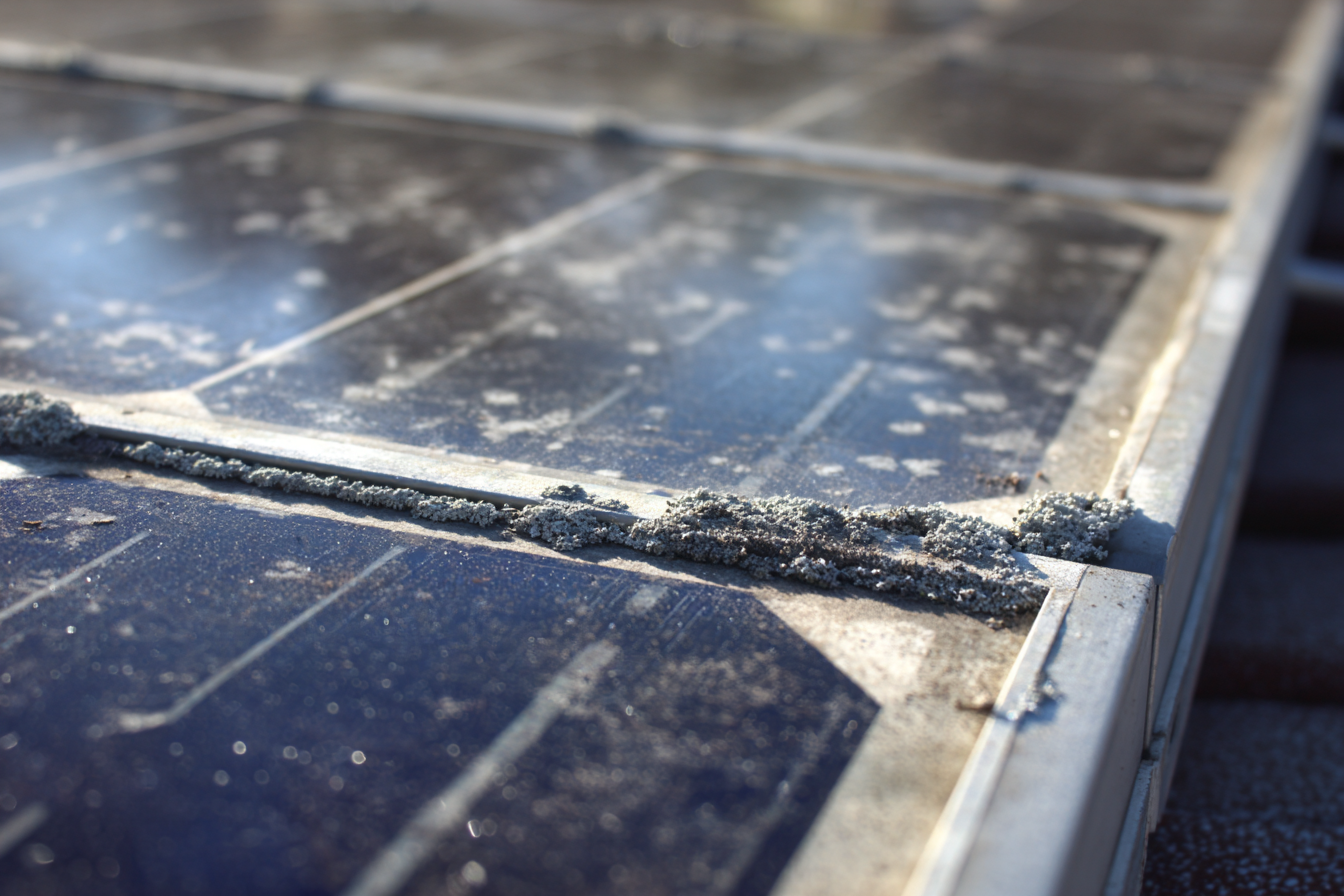
Over time, BIPV systems accumulate dust, pollen, and particulate matter in the urban or rural environment. Cleaning is not maintenance in the sense of repair; it is the removal of a thin layer that reduces light transmission. Rain often clears the most obvious accumulation, but seasonal dust and organic growth reduce annual output by ten to twenty percent in temperate climates. Inspection of these surfaces reveals the actual contours of the building's exposure—areas that receive more direct rainfall stay cleaner, while sheltered corners and low-angle sections trap material more readily.
Geothermal Exchange and Ground Stability
Below the frost line, the earth maintains a relatively constant temperature year-round—roughly the mean annual air temperature of the region, typically between forty-five and sixty degrees Fahrenheit across much of the temperate zone. This thermal stability is independent of season, weather, or atmospheric conditions. A closed-loop geothermal system exploits this constant by circulating fluid through buried pipe networks, allowing a heat pump to extract warmth in winter and reject heat in summer with greater efficiency than systems that exchange with the atmosphere.
The loops themselves are drilled or trenched into bedrock, soil, and subterranean moisture. Vertical bore holes driven one hundred to three hundred feet deep allow a single building to access a massive thermal reservoir. Horizontal trenches near the surface require more land but involve simpler drilling. In both configurations, the closed loop prevents groundwater contamination and allows the same circuit to serve both heating and cooling functions—heat extracted from the ground in January is returned to the ground in August.
The longevity of geothermal systems depends largely on fluid integrity and pipe durability. High-density polyethylene loops resist corrosion and can last fifty years or more with minimal degradation. The fluid inside—typically water with antifreeze and corrosion inhibitors—requires periodic testing to ensure it maintains its heat transfer properties and does not become acidic or contaminated. Unlike photovoltaic output, which declines gradually and visibly, geothermal system failure often occurs suddenly when a loop ruptures or the heat pump reaches the end of its mechanical life.
Solar Thermal Collection
Solar thermal systems predate photovoltaics by decades, and their fundamental simplicity remains a strength. Where photovoltaic cells convert light directly to electricity through quantum mechanics, solar thermal collectors absorb radiation and warm a fluid—water or a specialized heat-transfer oil—that flows through the system. Flat-plate collectors consist of a dark absorbing surface, insulation, and transparent glazing, all mounted in a shallow box. Evacuated-tube collectors use parallel glass tubes with a vacuum between them, achieving higher temperatures at the cost of greater complexity.
Thermal collection is particularly efficient for low-temperature applications—heating domestic water, warming pools, or preheating air. A flat-plate solar collector can reach temperatures high enough to supply hot water for most of the year in temperate climates, with a backup heater for winter or cloudy periods. The system requires circulation pumps, controls to prevent overheating, and storage—either thermal mass built into the structure or an insulated tank. Unlike photovoltaic electricity, which must be used immediately or stored in a battery, solar-heated water can be stored in massive quantities with relatively simple insulation.
The maintenance burden of solar thermal systems exceeds that of photovoltaic installations. Stagnation—the condition that occurs when circulation stops and fluid inside the collectors overheats—can degrade the fluid itself, reducing its long-term viability. Mineral buildup in hard-water areas requires periodic flushing. Freeze protection, pressure relief, and anti-scald devices all add mechanical complexity that must be inspected and serviced throughout the system's life.
Monitoring and the Ongoing Attention of Generation
The productivity of building-integrated energy systems becomes legible only through metering and monitoring. A digital display showing real-time kilowatts, cumulative kilowatt-hours, and seasonal trends transforms an invisible chemical process into observable data. This transparency reveals the true rhythm of generation—the rapid rise and fall of each day's output, the dramatic differences between winter and summer, the brief performance peaks when skies clear after days of cloud.
Regular inspection and data review form the practical counterpart to monitoring. A sustained decline in photovoltaic output that cannot be explained by season or weather suggests equipment degradation, wiring faults, or inverter malfunction. A geothermal system's performance can be tracked through temperature differentials between supply and return lines, revealing when heat extraction becomes less efficient or when the ground's thermal properties have shifted due to groundwater changes. This ongoing attention is a form of maintenance as essential as repointing mortar or clearing gutters—the sustained vigilance required to maintain a system's productive life.
The building that generates its own energy becomes, in a precise and physical sense, visible to itself. The morning when panels come online, the afternoon when output peaks, the winter afternoon when total daily generation may be measured in dozens of kilowatt-hours rather than hundreds—all of this registers not as abstraction but as a literal flow of energy through the structure. The building and its energy systems are one material entity, and their condition is one measure of the building's health.