Interior Finishes
The surfaces that enclose a space—walls, ceilings, floors—are far more than decorative. They establish the immediate sensory experience of the interior, affecting light, temperature, humidity, and the subtle comfort of physical contact. Unlike the structure beneath, these surfaces are in direct contact with the interior atmosphere. The materials that form them determine not only initial appearance but how space will age, how light will move through it, and whether the interior will participate in the environmental exchanges necessary for stable air.
Mineral Binders and the Breath of Walls
Walls finished with mineral paints inhabit a different category than surfaces sealed with synthetic binders. Lime wash, silicate paint, and clay paint all depend on binders that are themselves geological or mineral in origin—calcium hydroxide, potassium silicate, clay minerals—rather than polymers designed to create an impermeable film. This distinction is not aesthetic but functional.
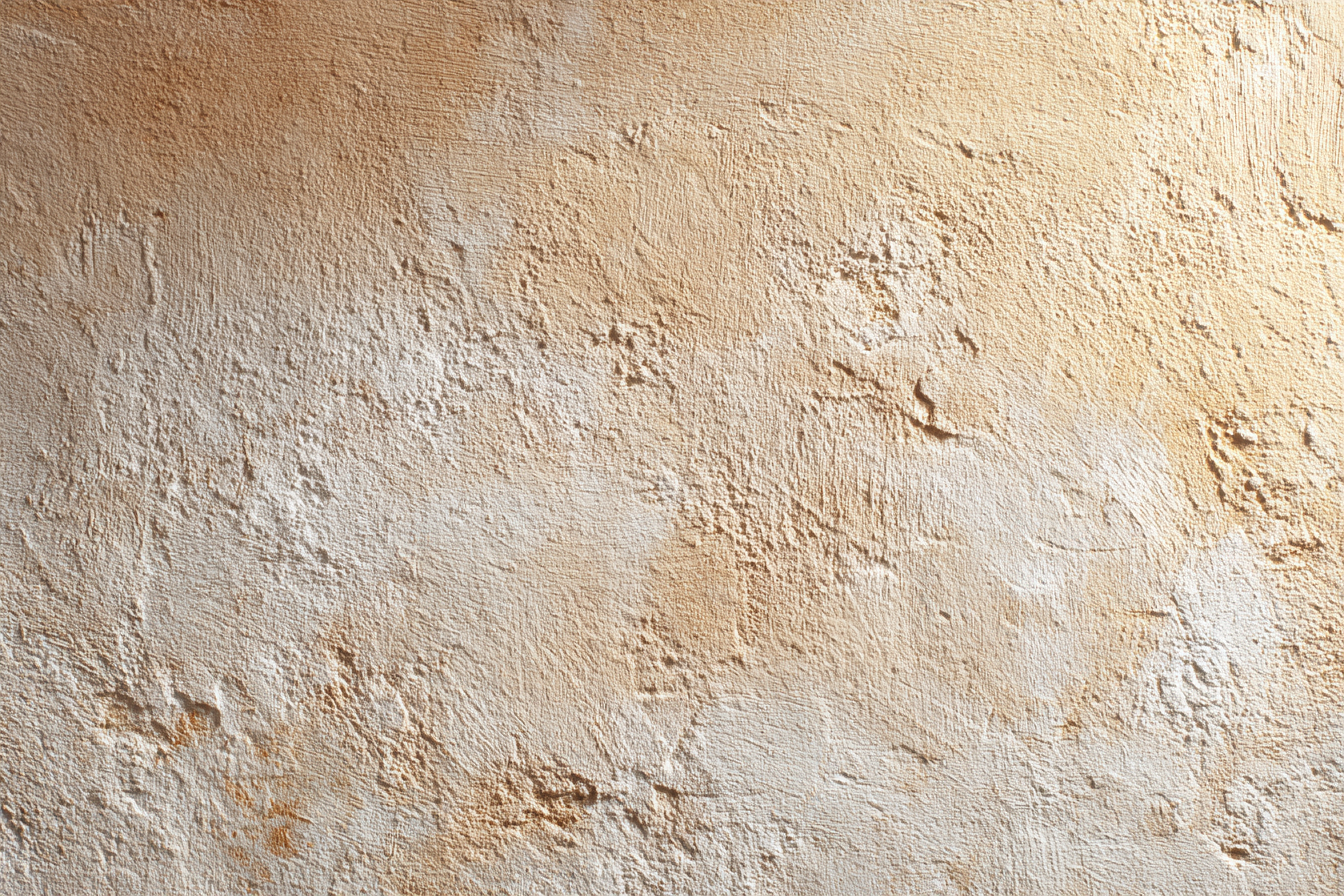
Lime wash consists of slaked lime suspended in water, with pigments derived from earth oxides—ochres, umbers, iron compounds—that have colored surfaces for millennia. The binder does not seal the substrate but forms a soft crystalline layer that continues to carbonate over time, hardening slowly as atmospheric carbon dioxide works through the coating. This process takes years. The surface remains porous, allowing water vapor to pass through freely. In humid conditions, the wall breathes with the interior air; in dry conditions, it releases moisture. Lime wash ages visibly—chalking slightly, showing brush marks, developing a patina where light and air have worked upon it. This visibility of aging is not deterioration but evidence of material exchange.
Silicate paints bind pigment with potassium silicate, a mineral compound that chemically bonds with mineral substrates like plaster and masonry. Once cured, silicate coatings form exceptionally durable mineral surfaces that remain breathable. The pigments are integrated into the binder itself rather than suspended on top, creating a surface that wears uniformly as it ages rather than flaking or peeling. The color may fade from exposure, but it fades gradually and completely, without the brittleness that leads to paint failure.
Clay paint operates on the principle of mechanical adhesion—clay particles bind to the substrate and to each other through interlocking rather than chemical reaction. Clay remains porous, capable of rapid humidity exchange. Colors derive from earth pigments. The surface has a matte quality distinct from modern latex finishes; light scatters rather than reflects, reducing glare and creating visual softness. Clay paint tolerates imperfect substrates better than other mineral coatings, conforming to slight irregularities rather than emphasizing them.
All three mineral finishes perform poorly when applied over synthetic primers or sealers, or over surfaces that have been sealed with polyurethane or synthetic varnish. The porosity that makes them functional requires direct contact with the substrate. Once applied to permeable surfaces—lime or gypsum plaster, mineral-based substrates—these coatings establish a continuous exchange with the interior atmosphere. The consequence is not merely comfort but the prevention of moisture accumulation, the suppression of mold growth, and the creation of surfaces that support rather than degrade air quality.
Untreated Wood and the Grain
Timber finished with penetrating oils or left to weather unfinished reveals properties obscured by modern sealed finishes. Wood is hygroscopic—it absorbs and releases moisture in response to humidity. Unsealed wood moves constantly, slightly, responding to seasonal changes. This movement is not damage. The grain becomes legible, the color shifts with light and progresses through natural aging, and the surface acquires texture through wear.
An oil finish—linseed oil, tung oil, or other natural drying oils—penetrates the wood fiber rather than sitting on the surface. The oil hardens through oxidation, creating a finish that is continuously part of the wood rather than a separate protective layer. The wood remains permeable. Over years and decades, the oil develops patina, darkens, and acquires character that sealed wood cannot achieve. Scratches and marks show in the wood itself, not in a coating layer.
Wood that receives no finish at all, exposed to interior air and occasional contact, develops an even more dramatic aged appearance. The surface oxidizes slightly, takes on a soft gray tone in areas exposed to light, and displays the color and texture variations within the timber as they shift subtly with changing light angles. Hard wear polishes certain surfaces while others remain matte. The floor, wall, or beam becomes a record of its location and use.
Sealed wood—finished with polyurethane, conversion varnish, or lacquer—remains essentially static. The finish isolates the wood from atmospheric exchange. Scratches penetrate the coating, exposing raw wood beneath, which then must be repaired through refinishing. The surface remains visually consistent, unchanging, until the moment when coating failure becomes apparent and the wood beneath is revealed as pale and unweathered. This contrast between sealed and living wood demonstrates the difference between arrested aging and continuous transformation.
Plaster, Clay, and Humidity Regulation
Lime-based and clay plasters serve as interior surfaces that actively manage humidity. Both materials have high porosity and substantial capacity to absorb and release water vapor without visible change. In a space where moisture levels fluctuate—from breath and perspiration, from cooking and bathing—these plasters dampen peaks and troughs, moderating extreme conditions. The mechanism is mechanical absorption, not chemical reaction; the material acts as a buffer reservoir.
Lime plaster contains calcium hydroxide and aggregate, typically sand and often fiber reinforcement. Applied in multiple layers, each layer bonds to the one beneath while remaining porous. The surface finishes with lime wash or is left as troweled plaster, textured by hand application. The finish defines visual character—rough, smooth, patterned—but the functional property remains: continuous vapor exchange with the interior air.
Clay plaster operates similarly, composed of clay minerals, sand, and often chopped fiber. The clay provides plasticity during application and shrinkage control during drying. Once dry, clay plaster remains soft enough that it can be damaged by abrasion or water spray, but in interior wall locations protected from direct water contact, clay plaster remains stable indefinitely. The color palette is limited to earth tones, and the surface has a characteristic matte, slightly chalky appearance. Color can be adjusted with earth pigments added to the plaster itself, creating finishes that have color throughout their depth rather than as a painted layer.
Both materials age by accumulating dust and marks from contact and air movement, visible evidence of material exchange. Unlike sealed surfaces, which must be cleaned or refinished when they become stained, plaster surfaces can be wiped clean or, if marks become permanent, can be spot-repaired by local troweling or repainting with fresh mineral finish. The material accommodates gradual renewal rather than requiring complete refinishing.
Natural Fibers and Surface Texture
Interior surfaces composed of natural fibers—wool, linen, hemp, cotton—add thermal and acoustic character to enclosed space while introducing texture that interacts with light and air. These fibers respond to moisture, swelling when humidity rises and shrinking when it falls. This responsiveness requires substrate stability but allows the fiber surface to modulate humidity in its immediate vicinity, creating localized conditions of equilibrium.
Wool carpet and wall coverings contain crimp and scale structures that scatter light, reducing glare and creating visual warmth. Wool takes dye through protein bonding, creating colors that appear saturated yet soft. The fiber resists staining through natural lanolin content and develops patina with sustained contact—areas of wear become distinguishable as slight color shifts rather than bare backing revealed.
Linen wall fabrics, either left natural or dyed, show texture distinctly. The slub yarn creates visual irregularity that prevents monotony at large scale. Linen absorbs moisture and releases it, remaining in equilibrium with interior humidity. The fiber does not off-gas. Over years, linen fades uniformly from light exposure and acquires soft drape and suppleness.
Hemp, cotton, and blends of natural fibers offer similar properties with variations in texture and appearance. Coarser fibers like hemp create pronounced texture; finer cotton produces smoother surfaces. All support the vapor exchange necessary for healthy interior air and all acquire patina rather than staining as their primary mode of visible aging.
Stone and Fired Clay as Thermal Surfaces
Stone and ceramic tile introduce thermal mass directly into the thermal envelope of a room. Unlike insulated wall surfaces that approach room temperature, stone and tile remain slightly cooler than the surrounding air even in heated interiors, creating a distinct thermal boundary between air and surface. This thermal property derives from high density and thermal conductivity—properties that also confer durability and very slow aging.
Natural stone—limestone, granite, slate, marble—arrives at the interior as the finished surface of its geological formation. The stone wears through direct contact and use, color may shift through oxidation and patina, but the fundamental material resists change at any observable timescale. A stone floor worn smooth by centuries of contact shows the material itself, not a degraded coating. Grout joints between tiles or stones may require repointing as mortar ages, but the stone itself remains.
Fired clay tiles, compressed and heated to vitrification, become extraordinarily durable ceramic surfaces. Traditional tiles remain porous enough to accept conventional grout but do not absorb water once fired. Color and texture develop during firing—the surface may show variation, crazing, or gloss depending on clay composition and firing temperature. Unlike modern vitreous tile, traditional fired clay ages through surface patina and accumulated use marks, not through degradation of the material itself.
Both stone and ceramic tile support durable interior finishes that improve with age, acquiring marks and patina that evidence long use while maintaining material integrity. The investment in these surfaces is justified by their timescale; a stone floor may serve multiple generations while carpet or vinyl requires replacement within decades.
Cork, Linoleum, and Resilient Naturals
Cork, harvested as bark from cork oak trees, offers a unique combination of resilience and natural aging. The material is thermally warm, provides acoustic damping, and compresses under load while returning to shape. Cork contains suberin, a natural waxy compound that makes the material water resistant without sealing. The surface develops a patina with use, color deepening where traffic is heavy. Small repairs can be made by local sanding or refinishing. Cork flooring lasts decades when maintained, during which its character becomes more distinct, not less.
True linoleum—a material often confused with vinyl—is composed of linseed oil, wood flour, cork dust, and gum rosin bonded to jute backing. Linoleum hardens with age as the linseed oil continues to cure, becoming more durable, not more brittle. The surface develops a patina and may show slight color shift, particularly with light exposure. Linoleum has thermal properties between carpet and tile—cooler than wood but not cold. The material is vapor permeable, acoustic, and supports steady movement. Production ceased in many regions, but linoleum remains available and has experienced revival as its longevity and environmental profile are reassessed.
Both materials contrast sharply with synthetic resilient flooring. Vinyl flooring and sheet goods are produced from PVC and plasticizers, materials that outgas volatile compounds for years after installation and that degrade in sunlight, becoming brittle and cracking. Synthetic carpet backing releases chemicals into interior air. These materials do not improve with age; they persist in degraded states, requiring eventual disposal. By contrast, cork and real linoleum, when they reach end of life, are compostable or can be repurposed without toxicity concerns.
The Distinction Between Aging and Degradation
The fundamental difference between sustainable interior finishes and synthetic alternatives is the difference between aging and degradation. Materials based on natural mineral and fiber compounds—lime, clay, wood, stone, cork, linen, wool—undergo aging, a process of gradual transformation that makes them more visibly integrated into their context. Scratches, marks, patina, color shifts, and wear become part of their identity.
Synthetic surfaces sealed with polymers—vinyl, laminate, polyurethane-coated wood, synthetic carpet—are designed for stasis, to resist change. When degradation occurs, it appears as failure: coating breakdown, discoloration, brittleness, or outgassing. The material does not age gracefully; it fails visibly and requires replacement.
The sensory distinction is immediate. A room finished with mineral paint, plaster, natural wood, and wool carpet presents surfaces that feel alive, responsive, and integrated with time. A room of vinyl, laminate, and synthetic finishes presents a static environment, one that resists rather than participates in the passage of time. One set of materials develops character through use; the other loses function through wear. The difference compounds over decades, as aged natural surfaces grow richer and degraded synthetics demand removal.