Longevity
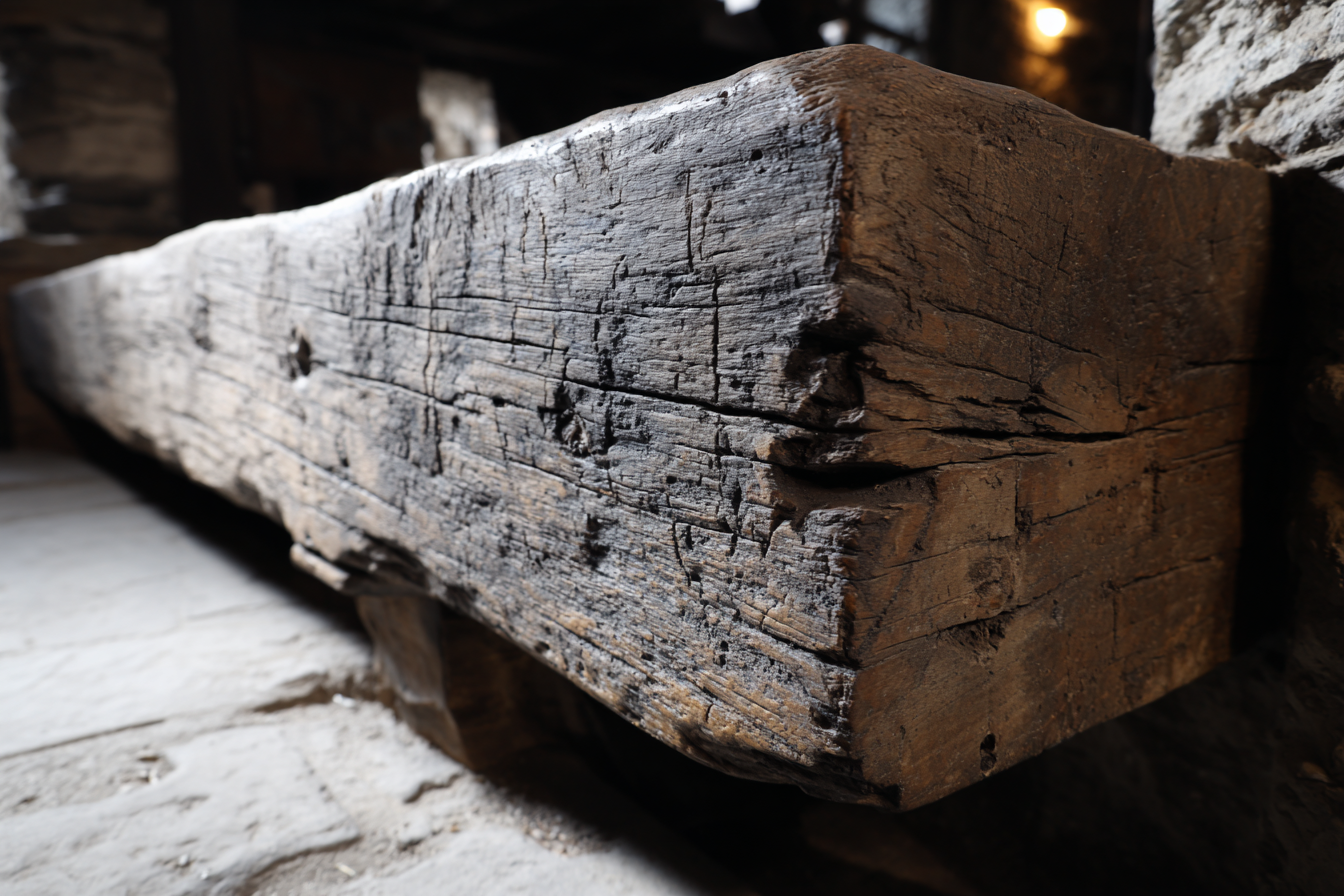
The oldest buildings still standing share a quality that has nothing to do with the strength of their materials. It is the building's willingness to be understood. A brick wall that shows its load path. Timber beams where the grain reveals the stress. Joints that speak plainly about what holds what. These buildings last not because they were overbuilt, but because the next repair can be seen, understood, and begun.
The Difference Between Overbuilt and Legible
There is a real distinction between a building that lasts because it is heavy enough to survive almost anything, and one that lasts because it can be maintained and understood. The distinction matters because only one of them can be repaired.
An overbuilt structure—one where the engineer has applied factors of safety so broadly that the building shrugs off decades of neglect—is a blunt instrument. It persists through indifference. But indifference is not eternal. When something finally goes wrong—when a window rots, when a roof fails, when a wall needs repointing—the blank opacity of the overbuilt building becomes a liability. No one can tell what it wants to become. Should the wall be cut into? Can the foundation be altered? The safest answer is demolition, because understanding cannot be forced from an impenetrable thing.
A legible building, by contrast, has announced its intentions. The stone bearing wall is plainly the structure; the timber partition is plainly not. The mortar joint is visible; the connection is exposed. When that legible building needs attention, the path forward is clear. The wall can be repaired because the repair can be seen, tested, and verified. The timber can be replaced because it is not wrapped in mystery. This clarity is what allows a building to be maintained across generations.
The Practice of Seeing How Things Work
There is a particular kind of attention that comes from standing in a building repeatedly, watching how light moves through it, how water runs down its faces, where cracks appear and disappear with seasons. This attention is what makes maintenance possible. It cannot be produced by codes or inspections alone. It requires time.
A building that makes its workings visible invites this attention. A wood-frame house with open joists (before the drywall goes up) is teaching something about itself. The load path is visible — weight concentrating at one spot, traveling from roof through studs to foundation. Water movement becomes traceable. When the drywall is hung and taped and painted, that knowledge is gone, but the building beneath remains teachable to anyone who takes the time to notice where the original marks are, where the settling has occurred, where the grain patterns tell a story of movement and load.
Exposed connections are not sentimental choices—they are practical ones. When a column sits visibly on its base, the foundation condition is readable. When joints are expressed rather than hidden, the geometry can be studied and the connection understood — whether it takes tension or compression, shear or bending. This is not decoration. It is notation.
The Role of Redundancy and the Cost of Fragility
A legible building is often one where systems have some redundancy built in. Not as an inefficiency, but as a resilience. The wall that can lose a few bricks and still stand. The floor system with enough capacity that one degraded joist does not cascade to failure. The roof truss arrangement where single members can be replaced without unbuilding the whole.
There is an inverse relationship between structural redundancy and required maintenance intensity. A building with built-in spare capacity can tolerate minor lapses in attention—a missed gutter cleaning, a delayed repair. The system holds. But buildings that are engineered to minimal margins demand precision in maintenance. Every component matters. Every detail must be perfect. This is a condition that grows more expensive over time, not less, because it requires an ever-higher level of attention. Most buildings are not given this level of attention, which is why minimally-designed buildings often fail long before their materials should expire.
The buildings that weather decades or centuries are often the ones where there is some generosity in the design—not waste, but enough slack that the building can absorb imperfection and keep standing. This generosity is its own form of wisdom.
When Small Repairs Become Habit
The long life of a building is not built into the initial construction. It is built by the accumulation of small repairs, made at the right moment, made visible, made durable in themselves. A regret that persists: the patch that was cheaper than the proper fix, the paint that went on wood that should have dried first, the sealant that was meant to last five years and was never meant to last twenty. These decisions, made at the moment of small failure, compound across time into catastrophic deterioration.
Legible buildings make good repairs easier. The failure is visible, its cause traceable. Matching materials can be found because the original is exposed. The original method can be replicated because it was not hidden. An invisible repair—the kind made inside walls, under coatings, in places where the next repair cannot learn from it—is a risk to the future. The building becomes less legible after each such repair. Eventually, no one knows what is holding it up.
The buildings that survive well are the ones where repairs are visible enough to teach. Where the replacement timber is not stained to match the original, but left to show its age difference. Where the patched plaster is honest about which bits are old and which are new. Where the surfaces and joints and amendments can be read for what has happened and what remains to be done.
The Relationship Between Building and Care
Longevity is not, in the end, a property of a building. It is a relationship. A stone building in a temperate climate where it is inspected regularly, where water is managed, where surfaces are cleaned and mortar is pointed—that building will stand for centuries. The same stone building, in the same place, neglected and left to shed mortar and collect standing water—that building deteriorates in decades. The stone did not change. The relationship did.
This is why a legible building has such an advantage. It invites the relationship. It is easier to care for a building that can be understood. It is harder to neglect something that announces its needs. An opaque building, one where the structure is hidden and the systems are concealed, requires a kind of abstract commitment to maintenance—faith that there is something important happening inside the walls. Most of that faith erodes before the building's real problems appear.
The buildings that last longest are the ones where the structure, the materials, the connections, and the methods of repair have been left visible enough to create a continuous conversation between the building and the attention it receives. This conversation is what extends life. This is what makes longevity possible.