Embodied Energy
Every material arrives at the site carrying a debt. The energy spent to extract it from the ground, process it into a usable form, and transport it to where it is needed — this energy is embodied in the material itself, invisible but permanent. It cannot be recovered. It can only be justified by what the material does next.
Embodied energy is measured in megajoules per kilogram or per unit volume, and the range across common building materials is enormous. A kilogram of sawn softwood carries roughly 7 to 10 megajoules. A kilogram of structural steel carries 20 to 35, depending on the proportion of recycled content. A kilogram of aluminum — the lightest structural metal — carries 170 to 230, almost entirely consumed in the electrolytic reduction of bauxite ore. Portland cement falls in between, at approximately 4 to 5 megajoules per kilogram, but is used in such quantities that its cumulative energy demand in a concrete structure is substantial.
These figures are not fixed. They shift with manufacturing efficiency, fuel source, transport distance, and the boundary conditions of the accounting. A timber beam milled from a tree felled a hundred kilometers away carries a different energy profile than one shipped across an ocean. Recycled steel, remelted in an electric arc furnace, requires a fraction of the energy needed to reduce iron ore in a blast furnace. The numbers are proximate, conditional, and dependent on decisions made long before the material reaches the formwork or the scaffold.
What the Number Contains
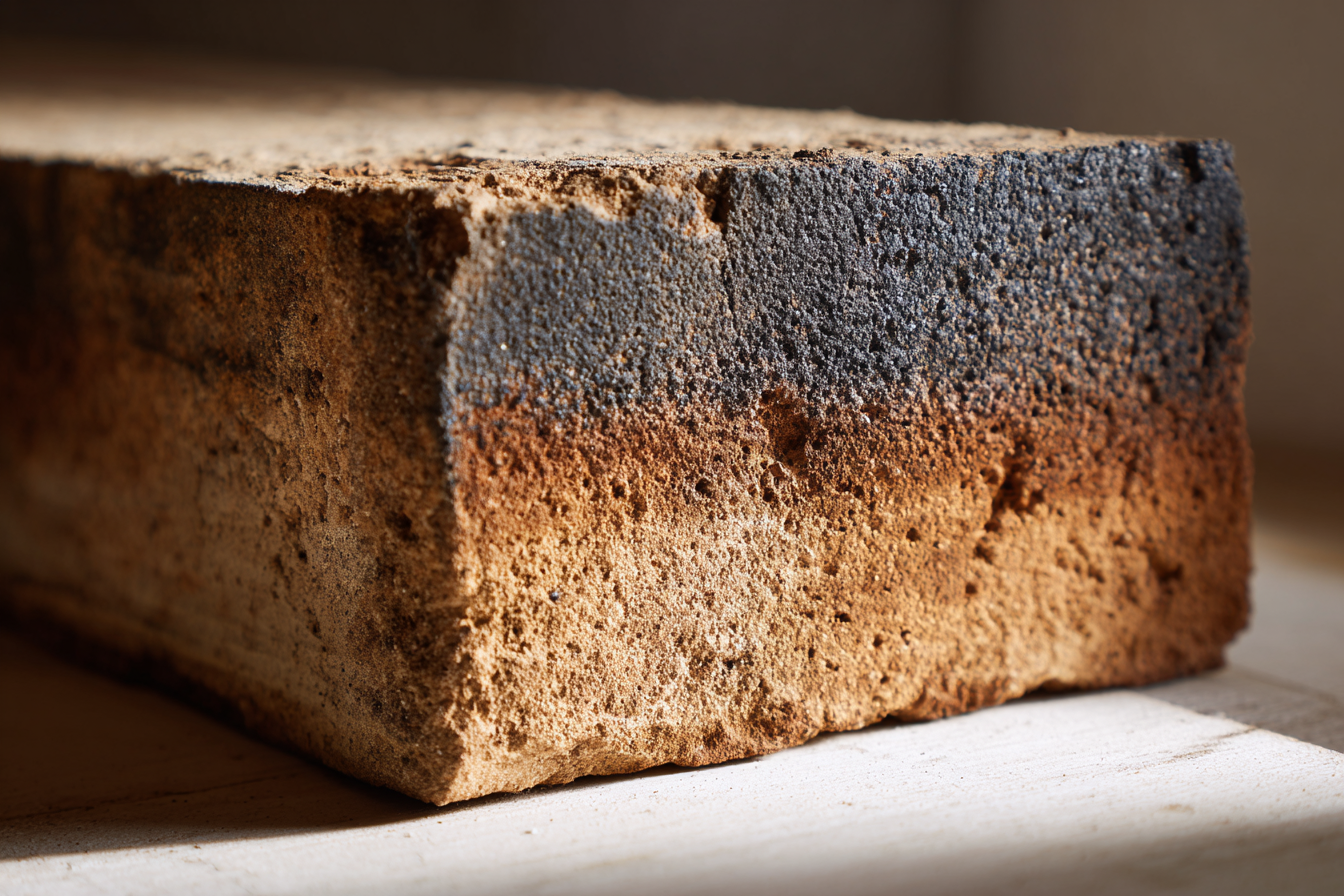
The energy embodied in a material accumulates across three stages: extraction, processing, and transport. Of these, processing is typically dominant. The kiln that fires clay into brick, the furnace that reduces ore to metal, the reactor that polymerizes resin — these transformations require concentrated energy, and they account for the vast majority of the embodied total for materials like steel, glass, cement, and aluminum.
Extraction is less energy-intensive per kilogram but carries other costs — land disturbance, habitat displacement, the removal of material from one place for use in another. Quarrying limestone for cement, dredging sand for concrete, logging timber for framing — each of these is an act of rearrangement, and the energy required to perform it is a small fraction of the total but the first in a chain of irreversible commitments.
Transport energy depends on mass, distance, and mode. Shipping by water is the most efficient per ton-kilometer; trucking is the least. For heavy materials like stone, aggregate, and earth, transport costs rise steeply with distance, which creates a natural incentive toward local sourcing. A rammed earth wall built from site-excavated subsoil has a transport energy approaching zero. A marble floor shipped from a quarry on another continent does not.
High and Low
The materials with the lowest embodied energy are those that require the least transformation. Earth, straw, and unprocessed stone are used in nearly the state in which they are found. Their embodied energy reflects only the effort of extraction and placement — digging, bundling, cutting, stacking. A straw bale wall, built from agricultural waste compressed by a baling machine, carries an embodied energy of roughly 0.5 to 1.5 megajoules per kilogram. A rammed earth wall, compacted from local subsoil with a small addition of cement, carries 0.7 to 2 megajoules per kilogram. These figures are an order of magnitude lower than any industrially processed material.
At the other extreme are the materials that undergo radical chemical or thermal transformation. Aluminum requires the Hall-Héroult electrolysis process, sustained at temperatures above 950 degrees Celsius, consuming approximately 13 to 16 kilowatt-hours per kilogram of metal produced. Glass requires sustained temperatures of 1,500 degrees or more to melt silica sand. Stainless steel alloys require multiple smelting and refining stages. These materials arrive at the site with a large energy debt, which is not necessarily an argument against their use — but it is an argument for using them where their specific properties are required and where no lower-energy alternative will serve.
Duration as Justification
The significance of embodied energy depends entirely on how long the material remains in service. A material with high embodied energy that lasts a century may represent a better energy investment than a low-energy material that must be replaced every twenty years. The calculation is not instantaneous — it unfolds over the life of the structure.
Slate roofing carries a high embodied energy relative to its mass, but a slate roof may last two hundred years or more without replacement. Asphalt shingles carry much less embodied energy per installation, but they degrade within fifteen to thirty years and must be stripped and replaced, often multiple times within the life of the building. The cumulative embodied energy of the asphalt roof, summed across its replacements, may exceed the single installation of slate. The cheaper, lighter, lower-energy material becomes the more expensive one when viewed across time.
This is the essential frame for evaluating embodied energy: not the energy per kilogram at the moment of installation, but the energy per year of useful service. A material that carries its energy debt lightly across decades or centuries is fundamentally different from one that spends the same debt in a single generation.
Recoverability
Some materials can be recovered at the end of their service life and returned to use with minimal additional energy. Structural steel can be unbolted, transported, and re-erected in a new structure, or melted and recast. Timber can be de-nailed and resawn, or chipped and compressed into engineered products. Stone can be salvaged whole and relaid. Each of these acts of recovery reduces the effective embodied energy of the material by extending the denominator — the total span of service — across multiple lives.
Other materials resist recovery. Concrete, once cured, can be crushed and used as aggregate but cannot be returned to its constituent cement and stone. Composite materials — fiber-reinforced polymers, laminated panels, spray-applied insulations — are often impossible to separate into reusable components. Their embodied energy is fully consumed in a single service life, and at the end of that life, the material becomes waste.
The choice of material, then, is not only a question of what it costs to make and how long it lasts. It is also a question of what happens when the structure is no longer needed — whether the material can continue, in some form, to justify the energy it carries.